

Resources
Case studies, research, and news from the Perforated team on data-efficient training and building better models with less data.
Case Studies

Lasso Loop: Eliminated virtually all remaining model error
Enabling the world's first at-home recycling solution.
June 2026

thoro.ai: 70% smaller models with higher accuracy
Improved edge AI performance for autonomous robotics workloads.
April 2026

Skim AI: Breaking the accuracy–efficiency tradeoff
A case study in smarter neural architectures for enterprise AI systems.
March 2026

Edge Impulse: Perforated Model Block
Demonstrating dendritic intelligence in real-world edge AI settings.
December 2025
Research
 Perforated
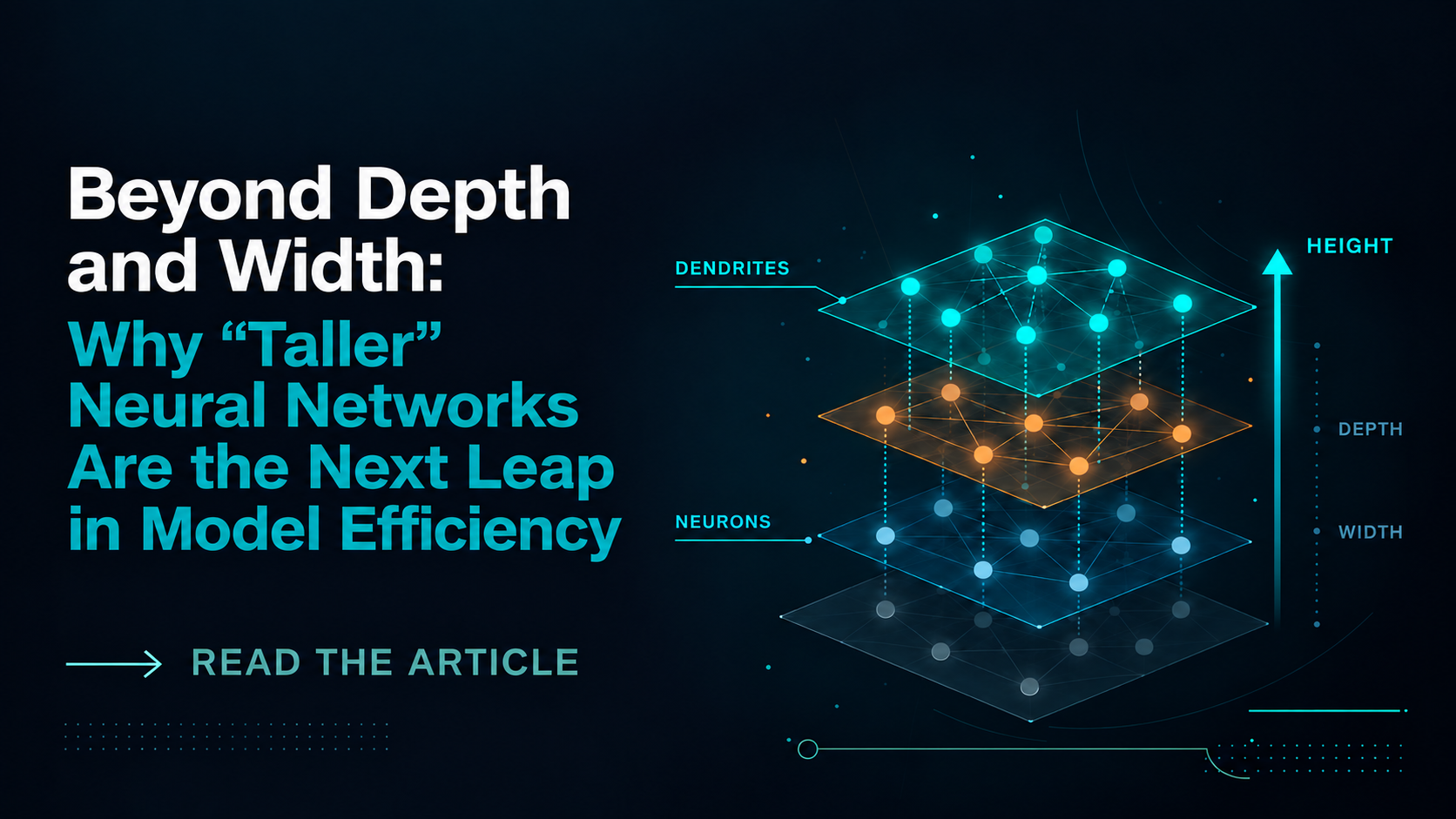
Beyond Depth and Width: Why "Taller" Neural Networks are the Next Leap
Introducing the third dimension in neural network architecture for model efficiency.
Perforated Research
September 2026
 Perforated
Prune It, Then Perforate
Exploring how pruning and dendritic perforation work together to create smaller, more efficient neural networks.
Towards Deep Learning
September 2026
 Perforated
Smarter, Not Bigger
How Perforation Lets ResNet-18 Perform Like ResNet-34
Perforated Research
August 2026
 Perforated
The Future of AI on the Edge
Making powerful AI models smaller, faster, and deployable on constrained edge devices.
arXiv preprint
May 2026
 Nature Communications
Dendrites endow neural networks
Researchers found that brain-inspired dendritic structures can reduce parameter count while improving accuracy.
Nature Communications
January 2025
 Perforated
Smarter Edge Vision. Smaller Models.
Real-time human detection for industrial robotics, with fewer parameters and faster deployment.
Perforated Research
May 2026
 Perforated
Rethinking Backpropagation. Inspired by Biology.
A biologically inspired extension to backpropagation that improves performance with less compute.
arXiv preprint
January 2025
 PubMed
Drawing inspiration from biological dendrites
How brain-inspired dendritic features are making artificial neural networks more powerful.
Current Opinion in Neurobiology
June 2021
 IEEE
IEEE
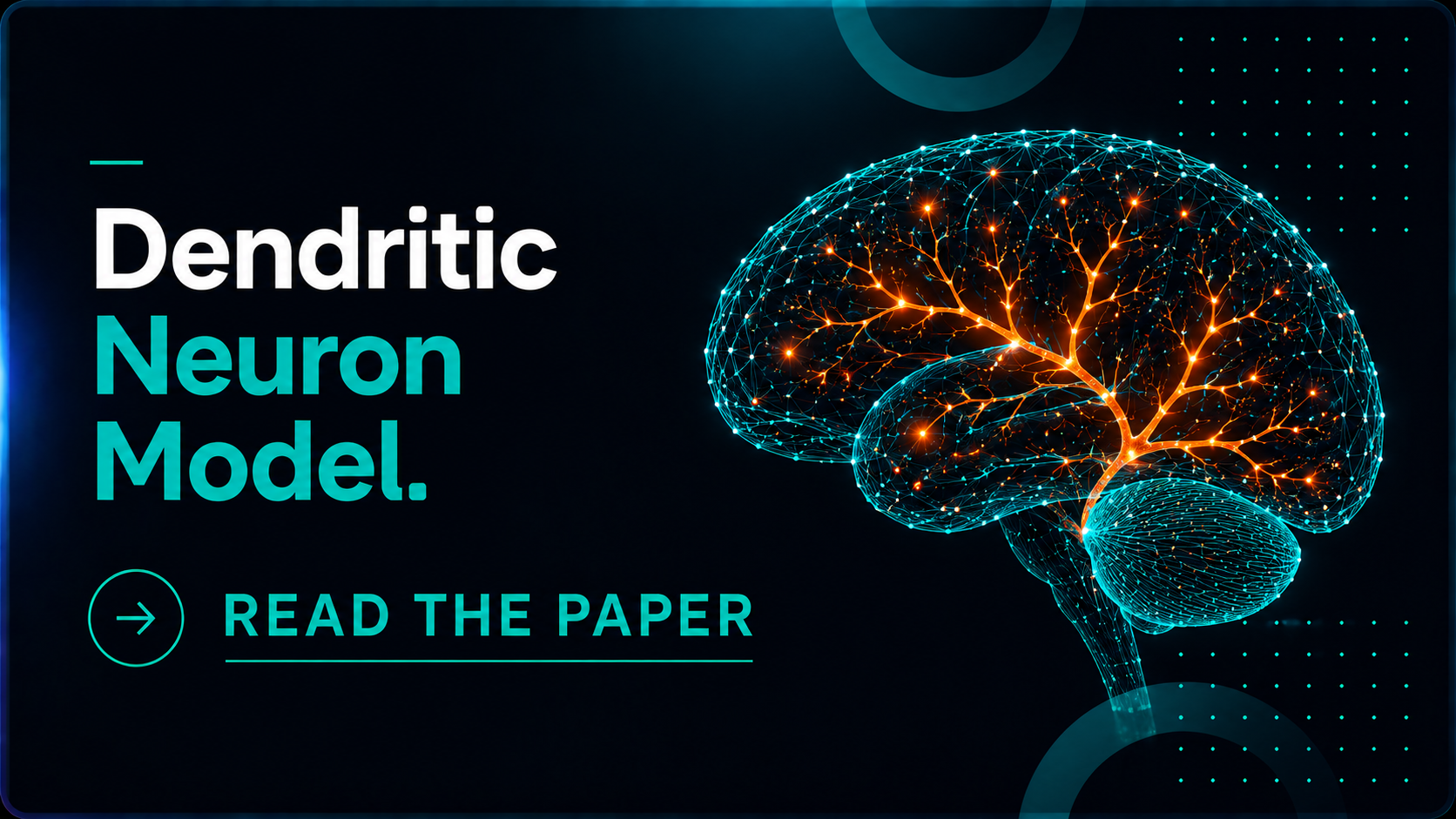
Dendritic Neuron Model With Effective Learning Algorithms.
Novel approaches to classification, approximation, and prediction using dendritic models.
IEEE - Transactions on Neural Networks
February 2019
 NeurIPS
The Cascade-Correlation Learning Architecture.
Foundational work on Cascade-Correlation as an architecture and supervised learning algorithm for artificial neural networks.
NeurIPS - Advances in Neural Information Processing Systems 2
January 1989
Press

What is Perforation?
An introduction to how dendritic perforation adds neuron-specific learning signals to neural networks, enabling higher accuracy with fewer parameters and less data.
Perforated
September 2026

Physical AI Model Performance
Exploring dendritic learning and efficient neural networks with Qualcomm and Edge Impulse.
Edge Impulse Podcast
July 2026

NFL Draft Week AI Showcase
Exploring real-time AI, sports analytics, and next-generation machine learning during NFL Draft week.
Carnegie Mellon University
April 2026

Perforated Joins the PyTorch Ecosystem
Perforated is implemented entirely in Python using standard PyTorch functionality.
AP News
April 2026

The Future of Dendritic Intelligence
Conversation with Thought Liters about the future of AI.
Thought Liters Podcast
March 2026

Rethinking the Building Blocks of AI
Why the next generation of machine learning may depend on smarter neural architectures, not just larger models.
Forbes
August 2025