Lasso Loop: Unlocking better model performance from existing data
How Perforated reduced remaining edge classification error by 77%
Industry: Climate Tech
Location: North America
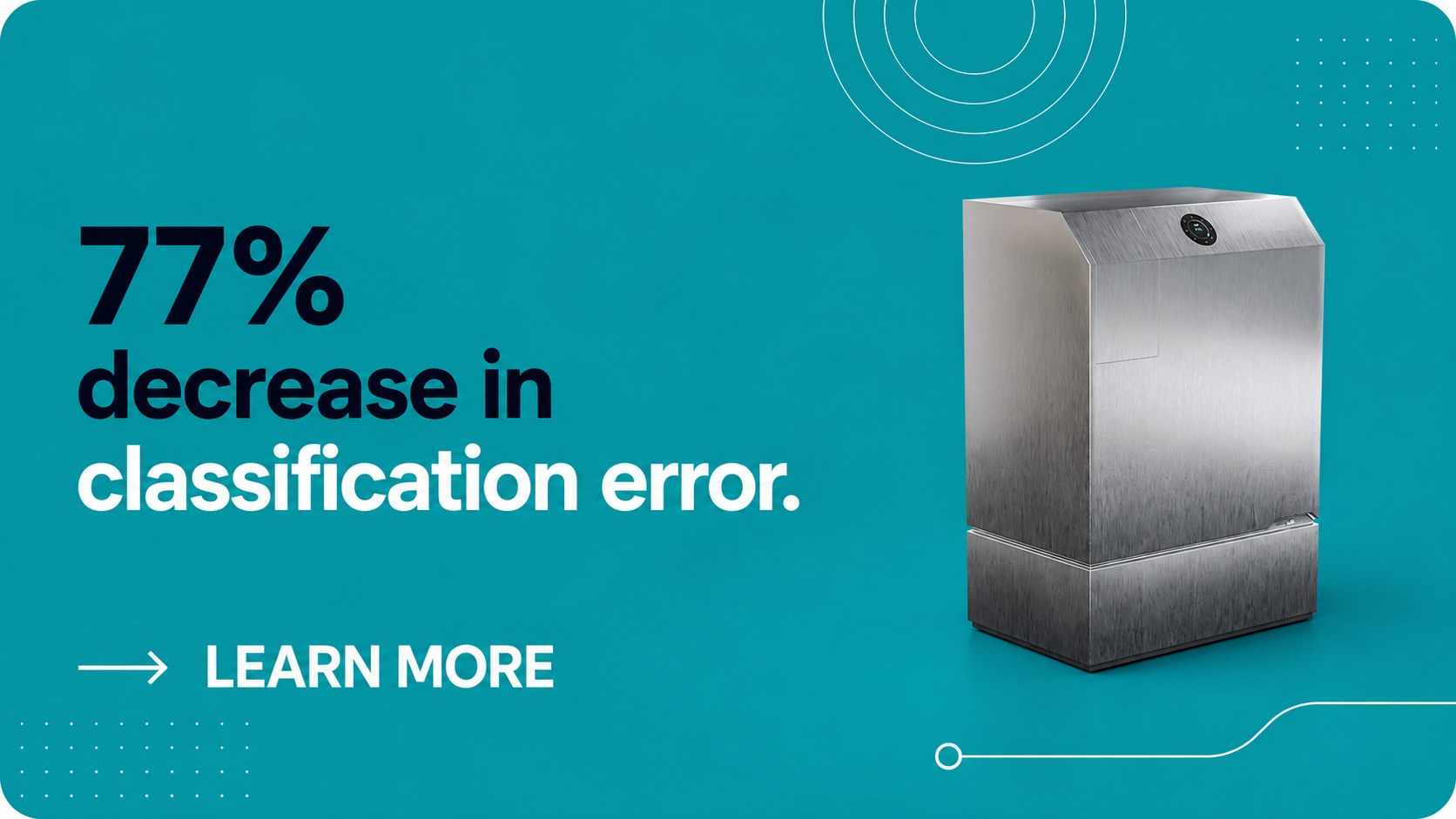
77% decrease
in classification error
4% increase
in accuracy output
Lasso Loop is building a first-of-its-kind at-home recycling system designed to make closed-loop recycling more accessible. Its technology identifies, sorts, and processes used materials directly in the home, helping keep materials in circulation for longer while reducing landfill waste. It’s also a great example of the unique challenges facing edge AI deployments.
With Perforated, Lasso Loop achieved:
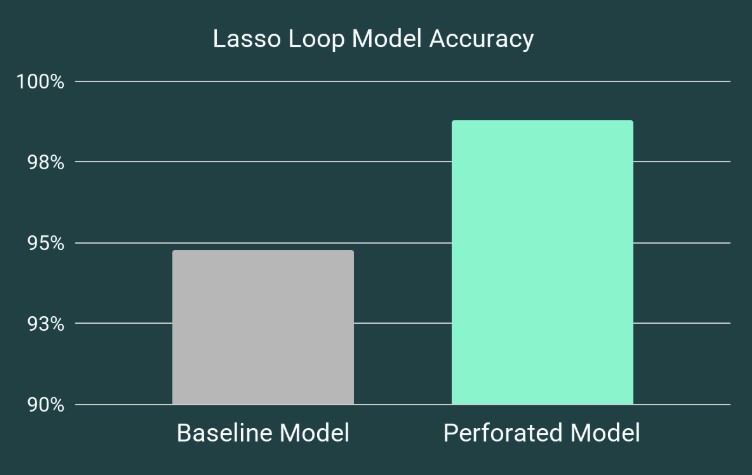
- 4% accuracy gain in material identification, increasing performance from 94.8% to 98.8%
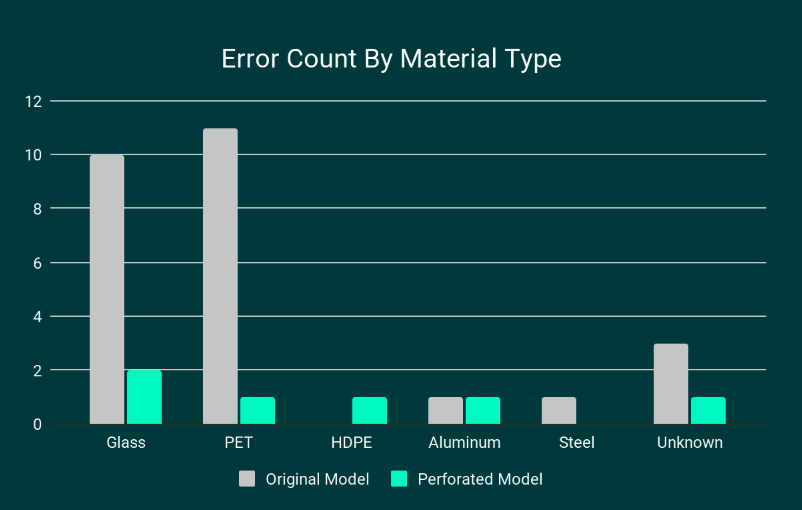
- 77% reduction in remaining classification error, shrinking error rates from 5.2% to 1.2%
- Reduced engineering overhead through seamless integration with Lasso Loop’s existing training workflow
The Challenge: Accuracy gains required a smarter path, not a bigger build
When Lasso Loop set out to bring recycling into the home, one technical question became central to product viability: how can AI reliably distinguish between materials like glass, plastic, and metal from a single image? In closed-loop recycling, that accuracy matters because material purity determines whether an input can be correctly processed and reused. A misclassified item will contaminate a recycling stream and reduce output quality, and cause jams or damage in the appliance and/or downstream equipment.
Lasso Loop used EfficientNet models to classify used materials from single images, investing significant engineering time and experimentation to improve model performance. The team reached 94.8% accuracy on its dataset, but ensuing gains began to plateau. At that level, the challenge was no longer basic model improvement, it was reducing the margin of error in a system where small mistakes could create downstream contamination risk. Achieving the next level of performance required a more data-efficient path forward.
The Solution: Finding a data-efficient path to better model performance
Rather than pursuing a lengthy cycle of additional data collection and labeling, Lasso Loop chose a more data-efficient path: extracting more value from the data, model, and training workflow already in place. Perforated integrated directly into Lasso Loop’s existing training workflow, enabling the team to improve model performance without changing model architecture or collecting additional training data. By helping AI models learn more efficiently from available data, Perforated enabled Lasso Loop to unlock additional performance from its existing dataset while minimizing engineering overhead.
The Outcome: Higher accuracy where every error mattered
The result was a model that extracted more value from the data already available, bringing performance closer to the level of precision required for reliable closed-loop recycling. With the Perforated improvement (from 94.8% to 98.8% accuracy), Lasso Loop can now credibly target 99.9% accuracy - the bare minimum needed for good recycling.